Spoliation and CCTV Footage in Personal Injury Cases
The scenario
The Supreme Court of Canada released a new case dealing with the legal principle of spoliation on July 31, 2026. So what should defence lawyers now expect me to argue in a garden-variety slip-and-fall personal injury case where the CCTV footage disappears? I’ll tell you and spoil the surprise!
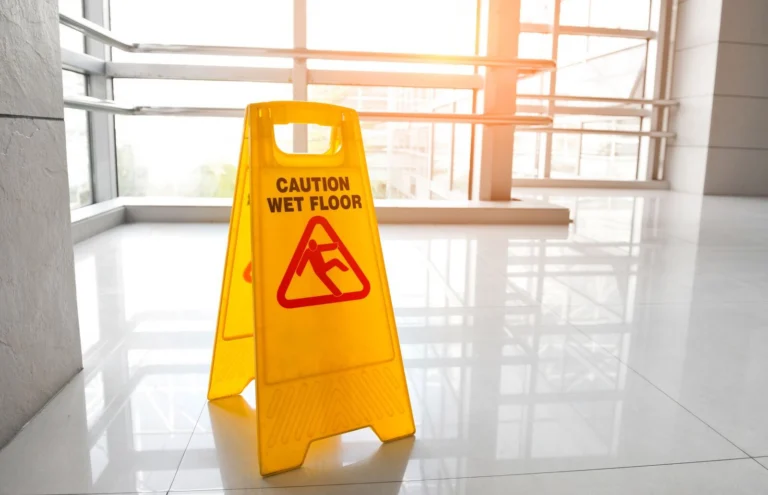
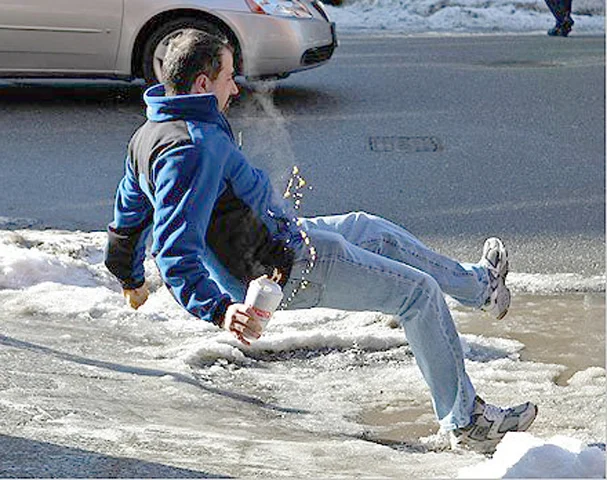
Scenario: My client slips and falls in the lobby of an apartment building. There are cameras. I write to the building right away, put it on notice of the fall, and ask it to preserve the footage of the incident plus the 24 hours before it, so that both the fall itself and the inspection and maintenance of the area are documented. The building does nothing. The system overwrites on its usual cycle. The video is gone forever.
What the Supreme Court said
That could be spoliation, and the Supreme Court has just discussed it in detail. In SS&C Technologies Canada Corp. v. Bank of New York Mellon Corp. 2026 SCC 29, the Court set out a four-part test. The evidence has to have been intentionally destroyed, litigation has to have been ongoing or reasonably contemplated at the time, the evidence has to have been relevant, and it has to be reasonable to infer it was destroyed to affect the litigation. The Court then added that where relevant evidence is unjustifiably destroyed in the face of contemplated litigation, “there should be little difficulty in concluding that this was done to affect the litigation.”
“The system deleted it automatically” is not an answer
The building will say (because in my experience they always say) nobody pressed delete and the system simply did what it was designed to do. The bank in SS&C tried the same argument, pointing to a retention policy that purged its records automatically. It did not work. The bank had been told to preserve and refused, because it did not think much of the claim against it. The Court condemned that conduct in strong terms and said disagreeing with the allegations “is never a justification for destroying or not producing evidence.”
A building that simply ignores my letter is, arguably, in much the same position. Once my preservation demand has arrived, letting the overwrite happen is, arguably, a choice, and courts will hopefully treat it that way. The one open question the Court flagged is whether purely negligent destruction, with no notice at all, can amount to spoliation. It didn’t decide that definitively, which is one more reason the notice letter matters.
Why the 24 hours before the fall matter
Litigation was plainly contemplated, because my letter said so. And the relevance is obvious in two directions. The footage of the fall shows how it happened. The 24 hours before it shows whether anyone ever came by to inspect, mop, salt, or put out a sign. In an occupiers’ liability case the building will want to show it had a reasonable system of inspection and that it actually followed the system. A cleaning log is a piece of paper somebody filled in. The video is the thing that tests the paper. Sometimes (in my experience) the apartment produces the video of the fall, but not the rest.
What the inference should look like
Proving the four elements raises a presumption that the destroyed evidence would have hurt the destroying party. The building can try to rebut it by showing the lost footage would not have hurt its case, but if it cannot, the Court was emphatic: “there is no discretion: courts must draw an inference that is adverse to the spoliator and that is capable of filling the gap left in the evidence.” The trial judge in SS&C drew inferences the Supreme Court described as “weak and incomplete” and “little more than the arguments that BNY made in its own defence.” The effect was to leave the innocent party carrying the uncertainty created by the other side’s misconduct, which the Court said was backwards (I agree).
So, a finding that the floor might have been wet for a while accomplishes nothing. What the case calls for (in my view as a plaintiff advocate) is a concrete finding of fact. The Court’s own example was that a judge could infer the missing evidence was as damaging to the destroying party’s case as reasonably possible.
In my slip and fall case, I would argue for a finding that nobody inspected the area in the preceding 24 hours, no warning was posted, and the hazard sat there long enough that a reasonable occupier would have found it.
The extent of the inference stays in the judge’s discretion, but a judge who draws a soft one now probably has to explain why. What this does is level the playing field so my client is not punished for the building’s decision to let the video vanish.
The practical lesson, for both sides
For plaintiff’s counsel, the lesson is speed and specificity. Name the cameras, name the time window, and say why the footage matters. For building owners and their insurers, the lesson is shorter. Retention policies are not a shield, and neither is your view of the merits. Download the footage. It takes ten minutes. If you don’t, then get ready for a long day of discovery and some tough questions……
This is general commentary, not legal advice.
Read more on this site
- Slip, trip and fall injuries
- Recent Car Accident & Slip and Fall Results
- Ontario Introduces 60-Day Notice Deadline for Slip and Fall Injuries
Speak to a lawyer
Initial consultations are free. Call 905-409-2438, send a text, message us on WhatsApp, or use the contact form. Steven Polak is licensed as a lawyer in Ontario and practises with Lerners LLP at 123 Athol Street, Whitby.